Medusa Ransomware: What Businesses Can Learn From the Attack
What is Medusa ransomware, and why has it become such a significant ransomware threat? This guide examines the tactics behind Medusa ransomware attacks and the security lessons businesses can apply to reduce exposure.

Imagine it’s 9:15 on a Monday morning.
An employee receives an email that appears to come from a familiar business contact. The request looks routine, and the link seems relevant to their work. They click. Nothing immediately happens.
The employee moves on.
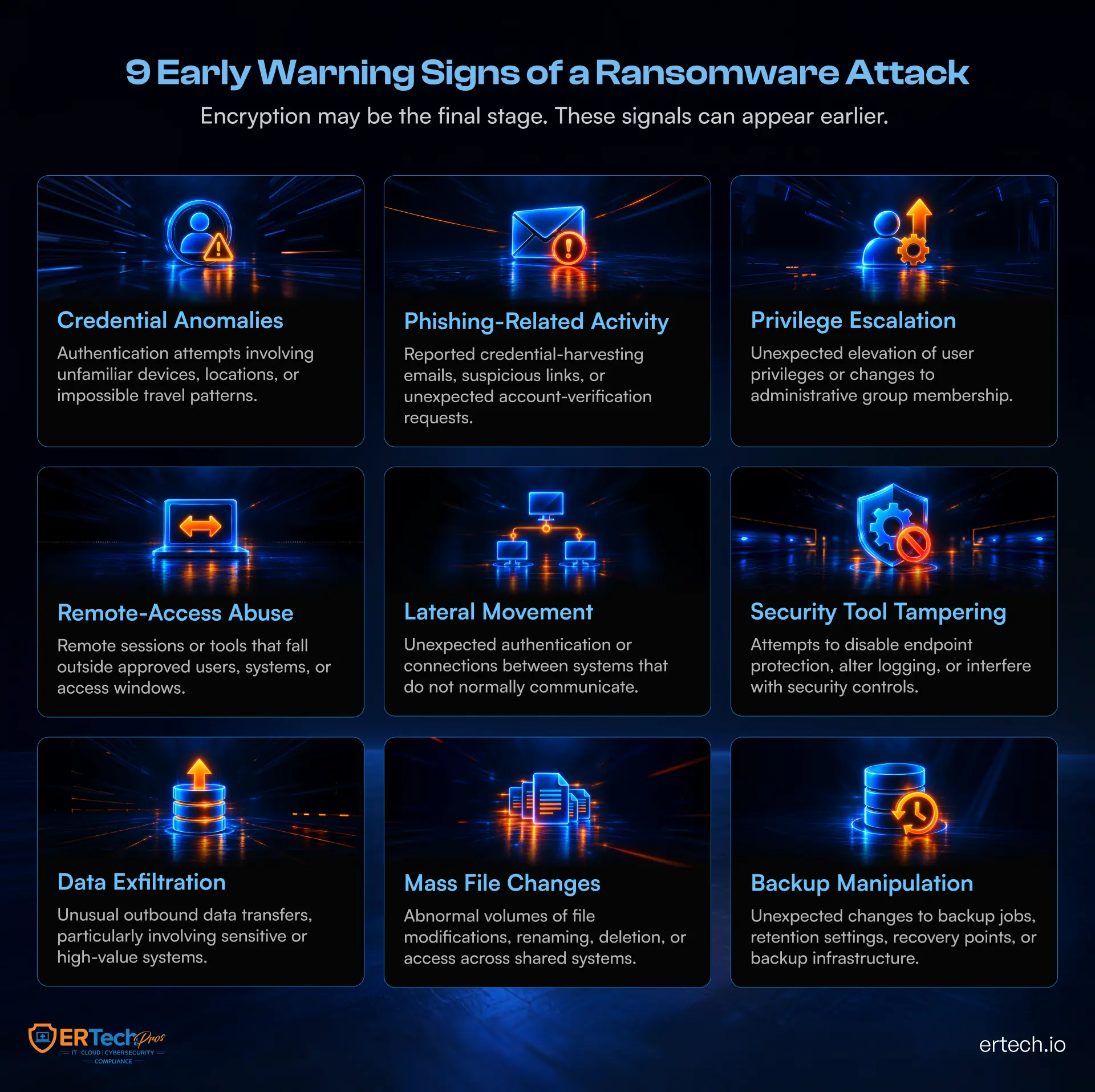
Hours later, security monitoring detects unusual authentication activity. A device is communicating with systems it does not normally access. By the time the security team connects the events, the original email is no longer the most important problem.
The attacker is already inside.
That scenario illustrates why modern ransomware cannot be understood as simply "malware that encrypts files." The encryption may be the final stage of an intrusion that began much earlier.
The scale of the ransomware problem continues to reflect that shift. IBM's 2026 research found that active ransomware and extortion groups increased 49%, from 73 in 2024 to 109 in 2025.
Medusa is one example of this broader evolution.
The FBI, CISA, and MS-ISAC reported that Medusa had affected more than 300 victims across critical infrastructure sectors, including medical, education, legal, insurance, technology, and manufacturing.
So, what is Medusa ransomware, and what can businesses learn from the way it operates?
The answer is less about memorizing one ransomware family's technical indicators and more about understanding the security weaknesses that allowed the operation to scale.
Would Your Business Know If a Cybercriminal Was Already Inside?
What Is Medusa Ransomware and Why Does It Matter?
Medusa ransomware is a ransomware-as-a-service (RaaS) variant first identified in June 2021. The FBI and CISA report that the operation evolved from a closed model into an affiliate model. This allowed developers and affiliates to divide responsibilities while keeping key operations, such as ransom negotiation, centrally controlled.
That operating model matters because it changes ransomware economics.
An organization does not necessarily face one isolated criminal actor developing, delivering, and operating an attack. Instead, different participants can contribute access, infrastructure, expertise, and operational support.
Medusa also uses double extortion. Attackers can steal data before encrypting systems, giving them another source of leverage: even if an organization can restore its systems, stolen information may still be used for extortion or exposed on the dark web.
This is an important distinction when considering what Medusa ransomware is.
It is an intrusion that can involve initial access, credential compromise, discovery, lateral movement, data theft, encryption, and extortion.
For businesses, instead of asking, "Can we stop ransomware from encrypting our files?" the better question is:
How many opportunities do we give an attacker to move from one compromised user or system to a business-wide incident?
How the Medusa Ransomware Threat Turns Familiar Weaknesses Into One Attack
The biggest lesson from the Medusa ransomware threat is simple: the weaknesses it exploits are familiar.
Phishing, stolen credentials, outdated systems, and remote access are everyday business risks. What makes them dangerous is how they can come together to give an attacker a way into the organization.
The FBI and CISA identified phishing as a key access method used by Medusa affiliates and also reported exploitation of unpatched software.
For businesses, the takeaway is clear: ransomware does not require one major security failure. Sometimes, several small gaps are enough.
Phishing Can Turn One Inbox Into an Entry Point
Email remains a common initial access vector, and Medusa ransomware gang email phishing campaigns demonstrate how quickly social engineering can turn a routine message into a security incident. Medusa affiliates have used phishing to obtain credentials, which they then use to access business environments.
Organizations should train employees to recognize the anatomy of a phishing email, while security teams should monitor for suspicious authentication following reported phishing attempts.
The critical control is limiting what a compromised account can access. Strong authentication, least-privilege access, and rapid credential and session controls can prevent one stolen credential from becoming a much larger foothold.
The lesson from Medusa ransomware gang email phishing is not simply to spot suspicious emails. It is to ensure that a compromised inbox does not give an attacker a clear path deeper into the business.
Unpatched Vulnerabilities Create Easy Entry Points
Not every Medusa ransomware intrusion starts with phishing. The FBI and CISA have also identified exploitation of unpatched vulnerabilities as an initial access method.
That means strong email security alone cannot close the attack surface. An unpatched internet-facing application, remote access platform, or critical system can still give attackers an entry point.
Medusa ransomware attacks reinforce the need for layered protection: patch critical vulnerabilities, monitor exposed systems, and reduce the number of paths an attacker can use to enter the business.
Why Medusa Ransomware Has Been So Effective
Calling Medusa the industry's "most efficient" ransomware requires some context. No universal industry metric ranks ransomware groups by operational efficiency.
What we can document is that the Medusa ransomware model combines several characteristics that make ransomware operations scalable. Understanding how ransomware works helps put that model into context:
- Affiliate structure that allows multiple operators to participate in attacks.
- Multiple initial-access methods, including phishing and exploitation of unpatched vulnerabilities.
- Double extortion, combining data theft with encryption to increase pressure on victims.
- Legitimate tools and remote-access capabilities used during intrusions to blend activity into normal business operations.
That combination offers several lessons.
What Businesses Can Learn From Medusa Ransomware Attacks
Studying Medusa ransomware attacks helps identify which controls can limit business impact when an intrusion succeeds.
Reduce Blast Radius
Organizations should limit how far an attacker can move after gaining access.
- Segment critical systems from standard user environments.
- Restrict administrative pathways between network zones.
- Isolate backup infrastructure from production where appropriate.
- Apply access controls based on system function and business need.
Protect Recovery Operations
Recovery infrastructure can become a target during a ransomware incident. Businesses should ensure that recovery systems remain available and trustworthy.
- Protect recovery points against unauthorized modification or deletion.
- Separate backup administration from standard user access.
- Monitor backup activity for unexpected changes.
- Test restoration procedures under realistic conditions.
- Document recovery priorities for critical business systems.
During an incident, a ransomware incident response checklist can help teams work through critical actions systematically, with containment and evidence preservation addressed before recovery begins.
Build for Containment and Recovery
Ransomware resilience depends on what happens after detection. Teams should have defined procedures for isolating affected systems, preserving evidence, containing the intrusion, and restoring operations.
A ransomware protection for business strategy should therefore address the full incident lifecycle, including containment and recovery.
Why Managed IT Services Matter When Ransomware Does Not Keep Business Hours
A ransomware incident does not follow business hours. An authentication anomaly at 2:00 a.m. or a sudden change in endpoint behavior can require investigation before the internal IT team is back online.
For businesses without dedicated, round-the-clock security operations, ER Tech Pros provides managed cybersecurity services that provide continuous coverage across your entire environment:
- 24/7 SOC Monitoring: Continuous analysis of security events across endpoints, networks, identities, and critical systems to identify activity that requires investigation.
- Managed EDR: Endpoint telemetry and behavioral detection to identify suspicious processes, investigate compromised devices, and support containment.
- Managed SIEM: Centralized event correlation that connects authentication, endpoint, network, and security activity to uncover potential intrusions.
- Vulnerability Management: Identification and prioritization of exploitable vulnerabilities and exposed systems before attackers can use them as an entry point.
- Email Security & Phishing Simulations: Protection against malicious messages and controlled simulations that help identify exposure to credential-theft attempts.
- Threat Detection: Behavioral analysis designed to identify suspicious activity even when the exact ransomware variant is unknown.
- Incident Response Support: Structured procedures to contain affected systems, investigate the scope of compromise, and coordinate recovery.
A documented ransomware response plan gives the response team defined actions and responsibilities when an incident is confirmed.
The objective is not simply to generate more alerts. It is to shorten the time between detection, investigation, containment, and response, whether facing the Medusa ransomware threat or another ransomware operation.
What Businesses Should Take Away From Medusa
Medusa ransomware is effective because it does not depend on one technique. It exploits familiar weaknesses and connects them across identities, endpoints, applications, networks, and recovery systems.
Ransomware remains one of the biggest cybersecurity threats businesses face because the attack does not end with encryption.
That is the lesson businesses should carry forward: do not build security around stopping one ransomware family. Build it around breaking the attack chain.
A resilient environment needs continuous visibility, strong identity controls, timely vulnerability remediation, segmentation, employee awareness, protected recovery infrastructure, and a tested response process.
Your response process should define who responds, what gets isolated, how you handle compromised credentials, how you preserve evidence, and when recovery can begin. If your organization has experienced a breach, restoring systems is only part of the process. Identifying how the attacker entered and what allowed the compromise to expand is essential to closing the same path.
ER Tech Pros builds bulletproof security strategies designed to keep businesses protected, prepared, and ready to respond when ransomware threats emerge.
Build a Defense That Does Not Depend on One Threat Name
Medusa is one ransomware threat. Your security strategy should detect and contain whatever comes next.
Got Questions?
We've Got Answers
Find clear answers to common questions that help guide your IT operations.
Related Content

How to Develop a Ransomware Recovery Plan & Prevent an Attack
Ransomware Incident Response Checklist: What to Do in the First 60 Minutes