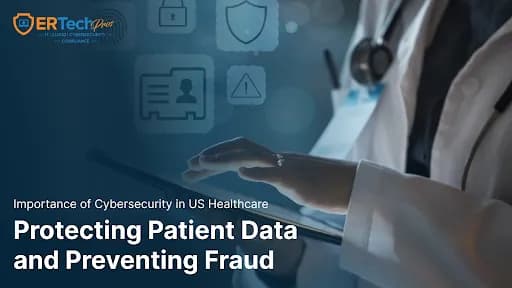
Importance of Cybersecurity in US Healthcare Protecting Patient Data and Preventing Fraud
Healthcare data breaches are rising as medical records move online. Learn why healthcare organizations are prime cyberattack targets and how strong cybersecurity strategies can safeguard patient data, prevent costly fines, and ensure compliance.
The days of storing patient records in filing cabinets are long gone. Today, healthcare organizations rely on electronic health records (EHRs), patient portals, and cloud platforms to manage sensitive information. While this digital transformation improves efficiency and patient care, it also increases exposure to cyber threats.
Healthcare data breaches are now among the most expensive cyber incidents, often costing millions per attack due to regulatory penalties, operational downtime, and reputational damage. That’s why modern providers must invest in proactive healthcare cybersecurity solutions designed to protect patient data, maintain HIPAA compliance, and prevent disruptions to care delivery.
At ER Tech Pros, we provide advanced cybersecurity services for healthcare organizations in Sacramento and beyond, helping providers transform vulnerabilities into strong, resilient defenses.
What Is Healthcare Cybersecurity?
Healthcare cybersecurity refers to technologies, policies, and security practices used to protect patient data, medical systems, and healthcare networks from cyberattacks, unauthorized access, and data breaches.
Its primary goals include:
- Protecting electronic health records (EHRs)
- Preventing ransomware attacks
- Maintaining HIPAA compliance
- Securing medical devices and cloud systems
- Ensuring uninterrupted patient care
Why Is Healthcare a Prime Target for Cyberattacks?
Cybercriminals increasingly target healthcare organizations because medical data is highly valuable and healthcare operations cannot afford downtime. Unlike other industries, providers must maintain constant system availability, making them more likely to pay ransoms quickly.
Why Hackers Target Healthcare Organizations
- High-value patient records: Medical identities sell for significantly more than credit card data on the dark web because they include personal, financial, and insurance information.
- Legacy technology risks: Many healthcare systems still operate on outdated software that lacks modern cybersecurity protections.
- Complex IT environments: Multiple vendors, devices, and cloud platforms create security gaps attackers exploit.
- Health records are goldmines: On the dark web, stolen medical data is worth more than credit card info—it can be used for identity theft, insurance fraud, or buying prescription drugs illegally.
- Hackers love targeting outdated tech: Many healthcare facilities still rely on legacy systems or outdated software that lack modern cybersecurity defenses, which makes them easier targets for hackers.
What Are the Most Common Cyber Threats in Healthcare?
Healthcare organizations commonly face:
- Ransomware attacks – Systems are locked until payment is made.
- Phishing attacks – Staff are tricked into revealing credentials.
- Data breaches – Unauthorized access to patient information.
- Insider threats – Accidental or intentional data exposure by employees.
- Medical device vulnerabilities – Connected devices becoming entry points for attackers.
Common Cyber Threats in Healthcare
In The Art of War, Sun Tzu says to know your enemy. The same principle applies to fighting cybercrime, so let’s get to know the types of attacks healthcare organizations face and how to defend against them:
- Ransomware Attacks: Hackers lock healthcare systems until a ransom is paid, forcing providers to halt services or pay up.
- Phishing Scams: Scammers send fake emails to trick staff into revealing passwords or clicking malicious links.
- Data Breaches: Cybercriminals exploit weak security measures to steal patient information, from medical histories to social security numbers.
A real-world example highlights the growing risk. In January 2025, Elite Plastic Surgery detected unauthorized access to its network, potentially exposing sensitive data from nearly 20,000 patients. Compromised information included names, birth dates, Social Security numbers, and insurance details — demonstrating how a single cybersecurity incident can impact thousands of individuals and disrupt healthcare operations.
The Consequences of Poor Cybersecurity in Healthcare
Healthcare organizations that lack dedicated managed cybersecurity services often experience longer recovery times and higher financial losses after a breach. Strong cybersecurity frameworks help providers detect threats early, minimize damage, and maintain patient trust.
For Patients
When a patient’s medical data security is compromised, the personal and financial consequences can be devastating.
- Identity Theft: Cybercriminals can use stolen medical records to file fraudulent insurance claims or open lines of credit in the victim’s name.
- Medical Fraud: Hackers can alter health records, leading to incorrect diagnoses or unauthorized prescriptions.
- Compromised Care: Ransomware attacks in healthcare can cause system outages, which may delay vital treatments or restrict medication access.
- Privacy Violations: Leaking sensitive health information, like mental health or HIV status, violates a patient’s privacy.
- Financial Loss: Victims may face unexpected medical bills or pay legal fees to restore their stolen identities.
For Healthcare Providers
The damage to healthcare organizations goes beyond lost data. It hurts their reputation, finances, and operations.
- Fines and Lawsuits: HIPAA violations due to data breaches can result in fines ranging from $141 to $2,134,831 for each category.
- Reputation Damage: Patients lose trust when their data is compromised, leading to canceled appointments and lost partnerships.
- Operational Disruptions: Ransomware attacks can shut down EHR systems, forcing providers to cancel procedures or revert to paper records.
- Financial Impact: Recovery involves ransom payments, IT repair costs, and revenue loss from halted operations.
- Regulatory Scrutiny: Repeated breaches can trigger government investigations, adding legal pressure and public scrutiny.
How Healthcare Providers Can Protect Patient Data
Healthcare organizations can strengthen security by:
- Enabling multi-factor authentication (MFA)
- Encrypting patient data at rest and in transit
- Performing regular security risk assessments
- Training employees on phishing awareness
- Maintaining secure backups and disaster recovery plans
- Partnering with healthcare cybersecurity experts
Key Cybersecurity Strategies for Protecting Patient Data
Protecting patient data requires more than one solution. It’s all about having smart, multi-layered approaches. Healthcare providers today should consider the following strategies so information stays secure at every level:
Multi-Factor Authentication (MFA)
Passwords alone aren’t enough. MFA adds an extra security step, like a text code or fingerprint scan, to prevent unauthorized access to EHRs and sensitive data.
Data Encryption
If patient data gets intercepted, encryption makes it unreadable to hackers without a decryption key, like locking your data in a digital safe.
Regular Software Updates
Outdated systems are easy pickings for hackers. Regular updates patch security holes and protect against known vulnerabilities.
Employee Training
In a way, your team is your first line of defense. Educating staff on spotting phishing emails and suspicious activity reduces human error (a major cause of data breaches).
Backup and Recovery Plans
Ransomware can shut you out of critical systems. Secure, off-site backups mean you can restore data quickly without paying a ransom.
Building a strong cybersecurity plan doesn’t have to be complicated, but it does need to cover all the essentials so you always stay prepared for any potential attacks.
Future Trends in Healthcare Cybersecurity
Healthcare cybersecurity is rapidly evolving as attackers adopt more advanced techniques. Emerging technologies are helping providers shift from reactive security to proactive threat prevention.
AI-Powered Threat Detection
Artificial intelligence is getting better and faster at identifying suspicious activity and blocking attacks.
Zero Trust Security Models
The “never trust, always verify” approach means no user or device is to be trusted automatically. Multi-factor authentication helps prove that a user or device has permission to view certain data depending on their access level.
Medical Device Security
With more connected devices (like smart monitors and infusion pumps), securing the Internet of Medical Things (IoMT) will become a top priority.
Behavioral Biometrics
Instead of just using passwords, security systems will also check how you type, move your mouse, or even speak to confirm your identity.
Cloud Security Innovations
As healthcare moves more data to the cloud, new encryption methods and secure cloud frameworks will help lock down patient information.
With these trends in mind, choosing the right cybersecurity solution is more important than ever. Always make sure you have:
✔ Real-time threat monitoring to catch attacks before they spread
✔ Data encryption for both stored and transmitted patient information
✔ Multi-factor authentication (MFA) for secure access
✔ HIPAA compliance support to keep your practice audit-ready
✔ Disaster recovery plans to minimize downtime if a data breach occurs
Modern healthcare cybersecurity is no longer just about firewalls and antivirus software. Comprehensive cybersecurity services now include real-time threat monitoring, cloud security protection, compliance management, vulnerability testing, and rapid incident response — all working together to safeguard patient data and ensure operational continuity.
Your Patients Trust You. Trust Us to Protect Them.
ER Tech Pros delivers round the clock cybersecurity built specifically for healthcare environments. You've seen the threats. You understand the stakes. But knowing what to do is only half the battle. The other half? Having the right team by your side.
Trust ER Tech Pros to provide you with the right healthcare cybersecurity solution. With us as your partner, you get proactive protection, ever-evolving safeguards, and the peace of mind that your data and patients are secure.
Comprehensive Security Assessments
Prevention is always better than cure, so we identify and reinforce weak spots in your network. From outdated software to risky access points, we implement preventive security measures to keep threats at bay.
Firewall Protection and Threat Monitoring
Cybercrime never sleeps, and neither do we. Our advanced firewalls block unauthorized access, and real-time threat monitoring ensures that any suspicious activity is caught and neutralized before it becomes a crisis.
HIPAA Compliance and Audit Support
Staying HIPAA-compliant can feel overwhelming. We help healthcare providers navigate the regulations, ensuring your cybersecurity practices meet the strictest standards so you’re always audit-ready.
Rapid Response and Recovery
Your patients trust you with their most sensitive information protecting that trust requires more than basic IT support.
ER Tech Pros delivers specialized healthcare cybersecurity solutions designed to prevent breaches, maintain compliance, and keep healthcare operations running without interruption. From security assessments and HIPAA compliance support to 24/7 monitoring and rapid incident response, our team helps healthcare providers stay secure in an increasingly complex threat landscape.
Ready to strengthen your cybersecurity posture? Schedule your complimentary cybersecurity consultation today.
Got Questions?
We've Got Answers
Find clear answers to common questions that help guide your IT operations.
Related Content
How to Develop a Ransomware Recovery Plan & Prevent an Attack
Ransomware Incident Response Checklist: What to Do in the First 60 Minutes